Most quotation requests for a building or a plant list cables and conduit next to breakers and panels: so many metres of this cross-section, so many lengths of that conduit. Choosing them well is mostly about five checks: current, voltage drop, short-circuit withstand, the environment, and how the cable is protected and terminated. This guide explains each check and the typical ranges you will see, so your bill of quantities is complete before you ask a supplier for prices.
The typical range, by use
These are the ranges buyers usually meet in low-voltage (LV) projects. They are general guidance: the designer's calculation and the project specification decide the final choice.
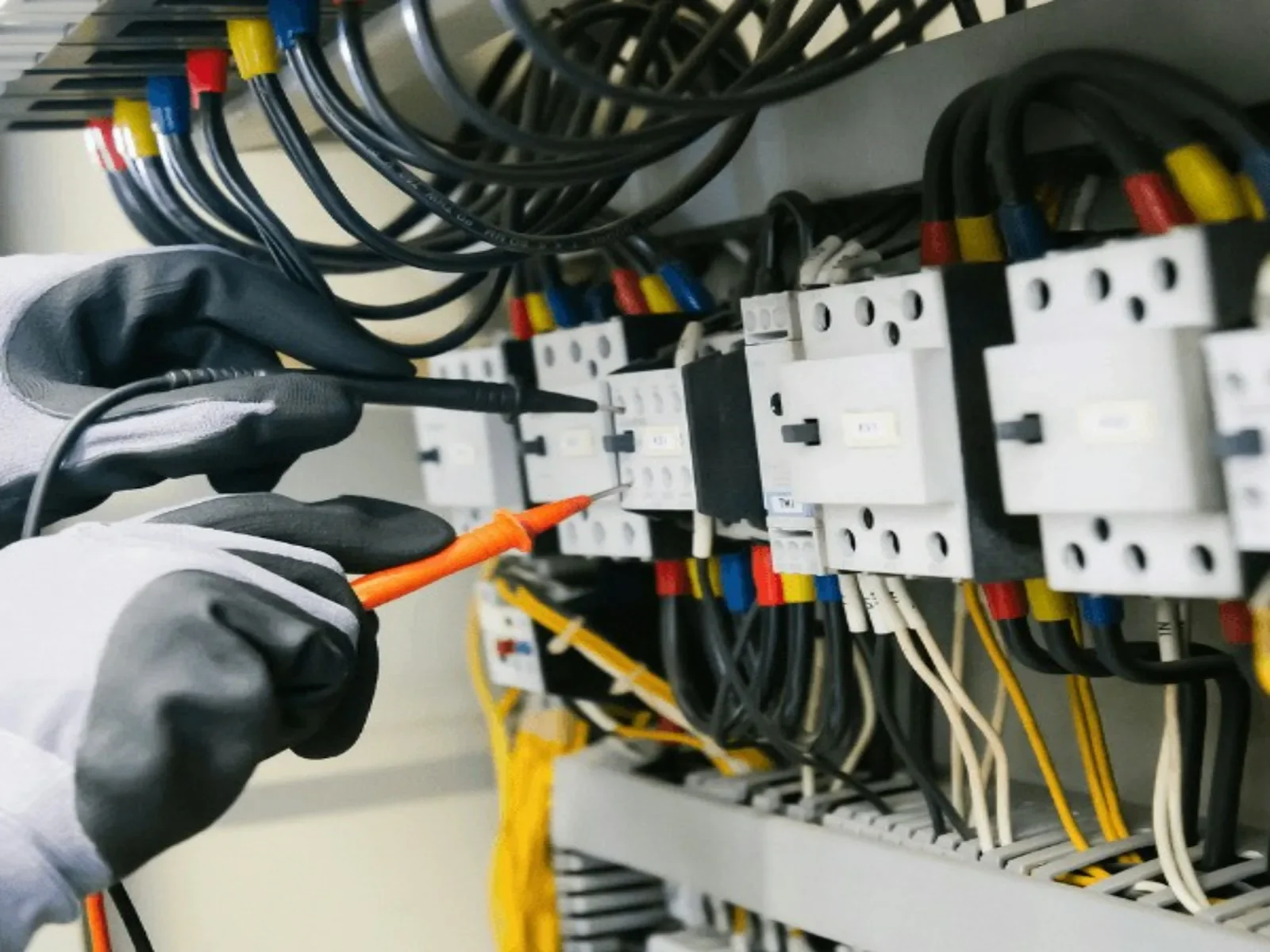
- Panel and control wiring: single-core flexible copper, PVC insulated, usually 0.75 to 2.5 mm² for control and 4 to 16 mm² for small power wiring inside panels.
- Power cables (0.6/1 kV): copper, PVC or XLPE insulated, multicore, from about 4 mm² up to 240 mm²; single-core for large feeders. Armoured types (steel wire or steel tape) are used where mechanical protection or burial is needed.
- Control and instrument cables: multicore from 2 to 37 cores; screened types for analogue signals such as 4-20 mA.
- Flexible cables: rubber or heavy PVC sheathed for motor terminals, portable equipment and moving parts.
- Fire-resistant and low-smoke (LSZH) cables: for emergency lighting, fire pumps and escape routes in public buildings.
- Conduit: rigid PVC in 16, 20, 25, 32, 40 and 50 mm; flexible conduit for the last metre to equipment; galvanised steel conduit where mechanical damage or fire rating requires it. Cable tray and ladder are separate items.
Five checks before you choose a cable
- Current-carrying capacity. The cable must carry the load current after derating for the installation method, grouping with other cables and the ambient temperature. In Saudi Arabia high ambient temperatures often require a larger cross-section than the table value.
- Voltage drop. Long runs can lose too much voltage even when the current rating is fine. Check the drop against the limit in your project specification.
- Short-circuit withstand. The cable and its protective device must survive the fault current for the time it takes the breaker to trip. Choose the breaker together with the cable; see the MCB vs MCCB guide.
- Insulation and sheath for the environment: PVC or XLPE (XLPE allows a higher operating temperature), armour for mechanical protection, UV-resistant sheath outdoors, LSZH where smoke matters, and moisture or chemical resistance where needed.
- Earth conductor and neutral: size the earth conductor according to the protective device and the earthing system, and confirm whether the neutral needs the same size as the phases.
Conduit: size and fill
Conduit protects cables from damage and makes later changes easier. Pick the size from the number and diameter of the cables, and leave room: crowded conduit overheats and makes pulling cables hard. A common rule of thumb is to keep the cables below about 40% of the inside area when pulling three or more, but follow the standard your project uses. Keep bends gentle, and use boxes at regular intervals for long runs. Outdoors use UV-stabilised conduit or steel.
Terminating and routing
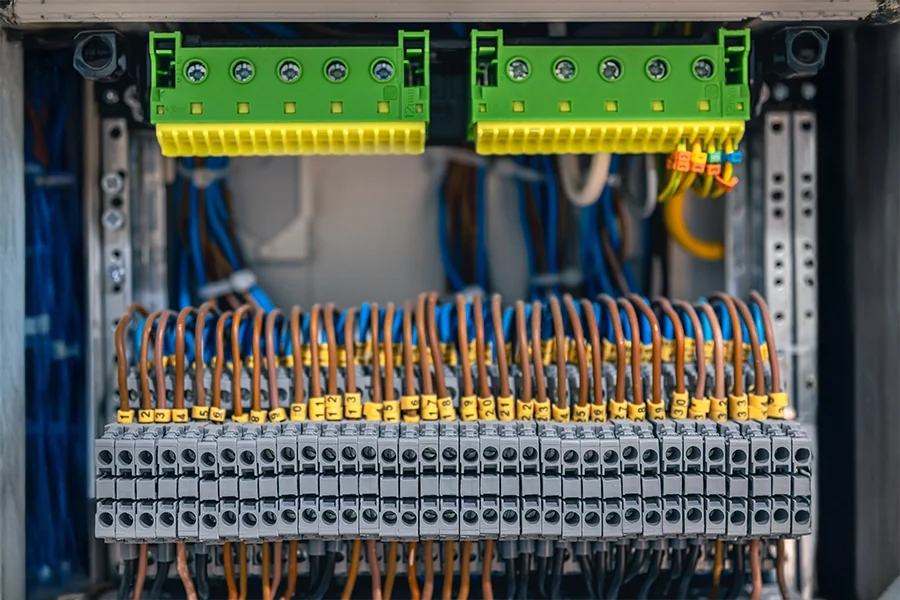
A cable is only as good as its termination. Use the right lug or ferrule for the conductor and tighten to the torque in the manufacturer's data; see the terminal blocks and DIN rail guide. Separate power cables from control and signal cables, and use screened cable with a proper earth connection near variable frequency drives (see the VFD sizing guide). For very large currents compare cables with busbar trunking.
What to send for a quote
- Cable type and voltage rating (for example 0.6/1 kV), number of cores and cross-section, copper conductor.
- Insulation and sheath (PVC or XLPE), armoured or not, and any LSZH or fire-resistant requirement.
- Length for each size, and the drum length you can accept.
- Conduit type and size, with quantities, and the fittings and boxes.
- Standards, approvals or the consultant's specification, delivery site and date.
- If the cables serve a panel, send the single-line diagram too (panel types guide).
Common mistakes
- Choosing only by current and ignoring voltage drop on long runs.
- Forgetting derating for high ambient temperature and grouped cables.
- Selecting the breaker and the cable separately, so the cable is not protected in a fault.
- Filling conduit too tightly.
- Mixing power and signal cables in the same route.
- A quotation that lists metres but not the standard, the insulation or the sheath.
Where Arab Arc Trading fits
Arab Arc Trading supplies cables together with panels, protection devices and terminations from Jeddah. Ask for the current range and availability for your sizes and the delivery time. See Electrical Panel Assemblies, LV Protection and Distribution and Termination and Connectivity, or contact us with your list of cables and conduit.
FAQ
How do I choose the cable size?
Start from the load current, derate for the installation method, grouping and ambient temperature, then check voltage drop and the short-circuit withstand with the protective device.
Is PVC or XLPE better?
XLPE allows a higher operating temperature and is common for power cables; PVC is common for building wiring and control cables. The specification decides.
Do I need armoured cable?
Use armoured cable where it can be damaged mechanically or is buried, and where the specification requires it. Inside conduit or on a tray, unarmoured cable is often enough.
What size of PVC conduit do I need?
It depends on the number and diameter of the cables; leave spare room and follow the fill rule of your standard. Common sizes run from 16 to 50 mm.
Cover photo: Toolmash Expo / Unsplash. Other images: Arab Arc Trading media library.