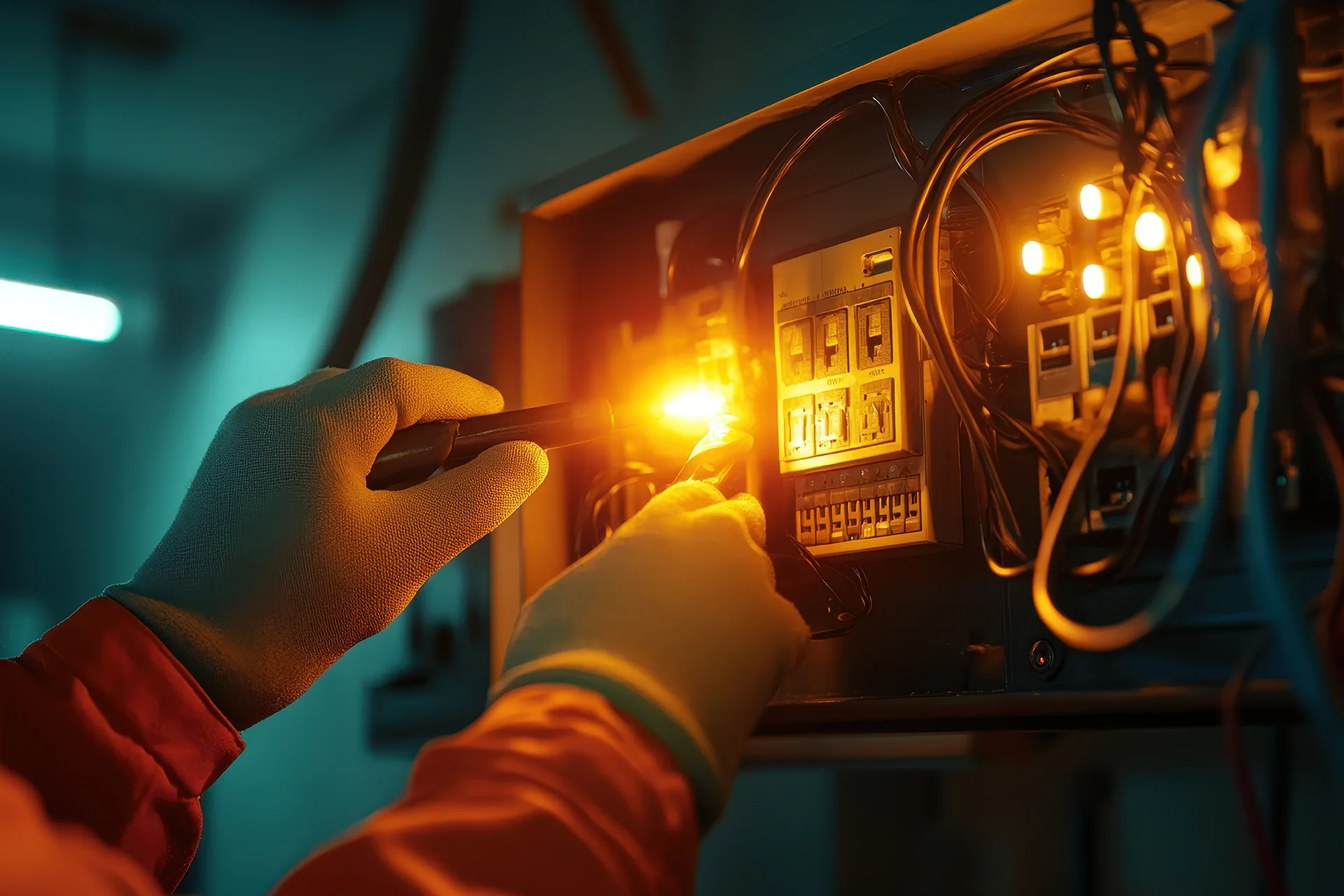
An ATS panel moves a building's load from the normal supply (the mains) to a standby supply (usually a generator) when the mains fail, and moves it back when the mains return. It does this without anyone touching a switch, and it never connects the two sources to the load at the same time. This guide explains how it works, the types you will see in quotations, and what to specify before you order.
ATS meaning and quick answer
ATS stands for automatic transfer switch. An ATS panel is the enclosure that holds the transfer switch, its controller, the interlocks and the wiring. In hospitals, data rooms, factories, pump stations and large buildings it keeps essential loads running during a mains failure.
How an ATS panel works
- It watches the mains. The controller measures voltage (and often phase sequence and frequency) on the normal source.
- It detects a failure. If the voltage drops, a phase is lost or the supply goes outside the set limits for longer than a short delay, the controller treats it as a failure. The delay avoids reacting to a brief dip.
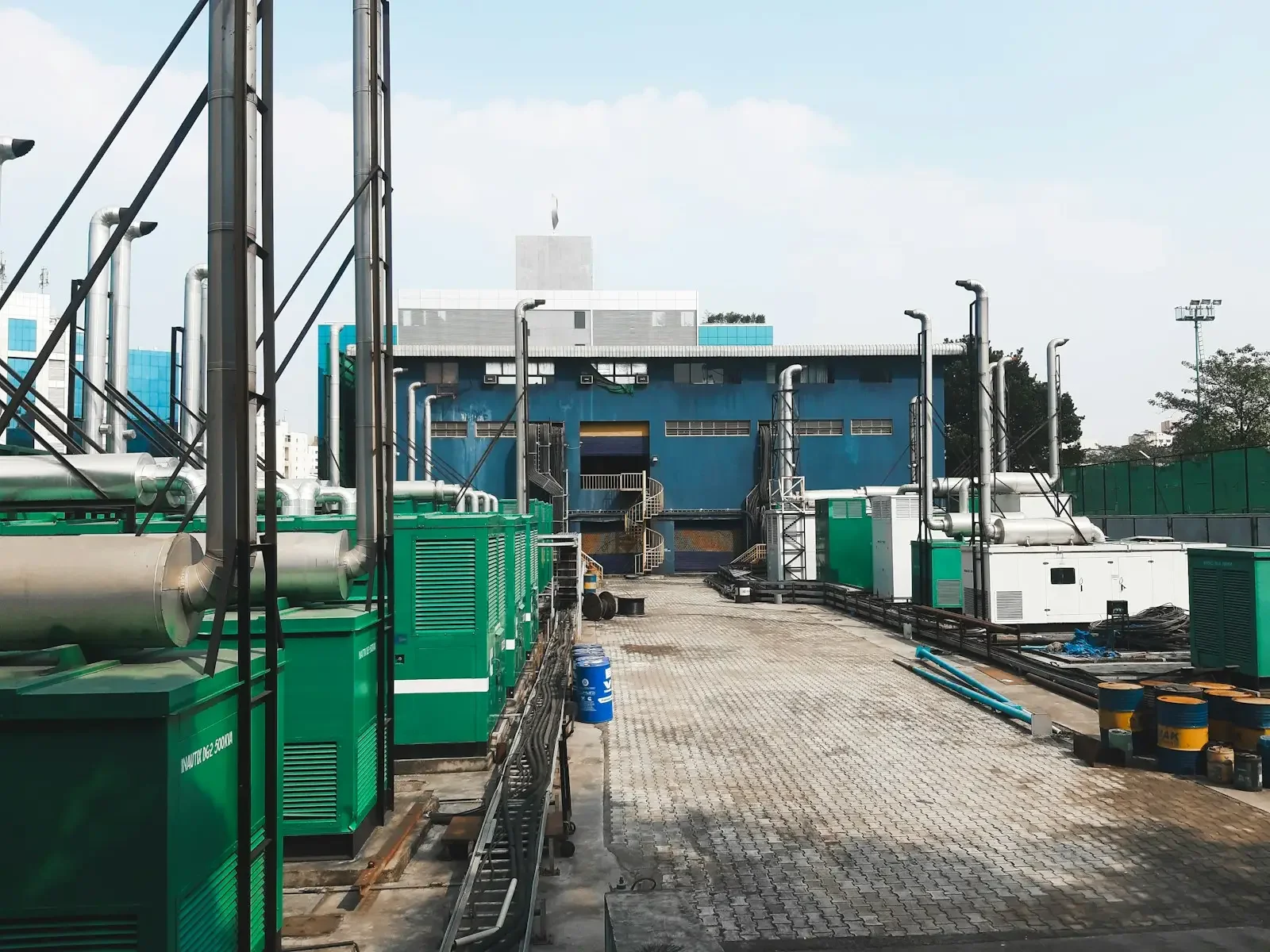
- It asks the generator to start. The panel sends a start signal. In many projects the panel also contains the generator controller; in others the generator has its own.
- It waits for a healthy standby supply. The controller checks voltage and frequency on the generator.
- It transfers the load. The switch opens the mains side and closes the generator side. Mechanical and electrical interlocks make it impossible to close both.
- It waits for the mains to return. When the mains are healthy again for a set time, the load is transferred back (the "retransfer" delay prevents bouncing between sources).
- It lets the generator cool down and stop.
Main types of ATS
- Contactor-based: two interlocked contactors; common for smaller currents.
- Breaker-based: two motorised circuit breakers (MCCB or air circuit breaker) with interlocks; common for larger currents and higher fault levels. For breaker basics see the MCB vs MCCB guide.
- Dedicated transfer switch equipment: a switch designed only for transferring between two sources.
- Open transition: break-before-make; the load is briefly de-energised. This is the usual choice.
- Closed transition: the two sources overlap for a moment. It needs approval from the utility and special protection, so confirm with your consultant first.
What is inside an ATS panel
- The transfer mechanism (contactors, motorised breakers or a transfer switch).
- A controller or relays that sense the sources, run the delays and give the start signal.
- Mechanical and electrical interlocks.
- A manual override for maintenance and emergencies.
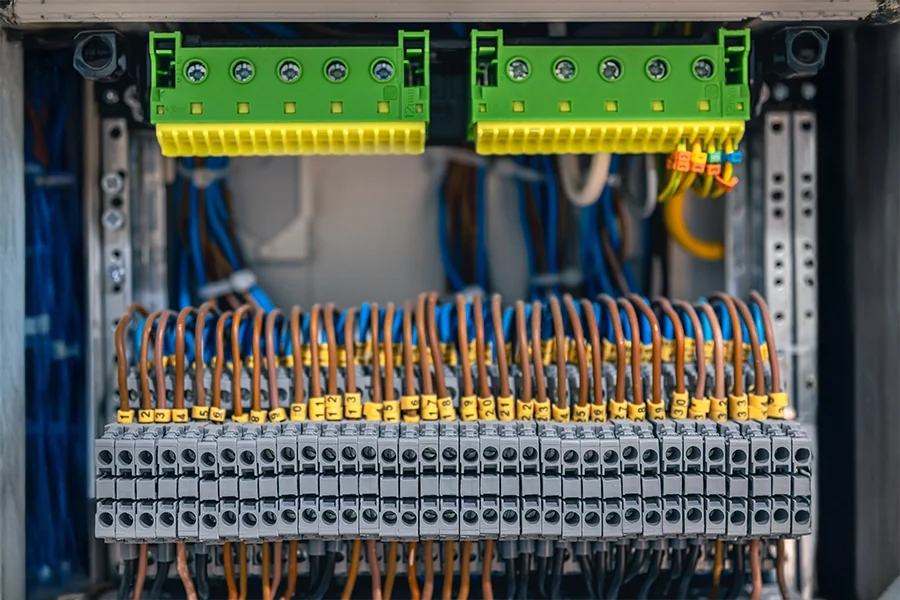
- Busbars, terminals and control wiring (terminal blocks guide).
- An enclosure with the right protection rating and indicator lamps.
ATS panel vs AMF panel vs manual changeover
The terms overlap. A manual changeover switch needs a person to operate it. An ATS transfers automatically. An AMF (automatic mains failure) panel is usually an ATS with a controller that also starts and stops the generator. Always confirm in writing which functions the supplier includes.
An ATS also does not replace a UPS: there is always a gap while the generator starts, so sensitive loads still need a UPS to bridge it.
What to specify before you order
- System voltage and frequency (for example 380/220 V or 400/230 V, 50 or 60 Hz, as per the project).
- Rated current and the type of load, including motor starting current (see the VFD guide and the MCC guide).
- Number of poles: 3-pole or 4-pole. Whether the neutral is switched depends on the earthing system, so ask the designer.
- Short-circuit rating (kA) at the point of installation.
- Transition type: open or closed.
- Controller functions: generator start and stop, test mode, adjustable delays, alarms, communication to a building system.
- Enclosure: indoor or outdoor, IP rating, dimensions and cable entry.
- Standards and approvals: transfer switching equipment is covered by IEC 60947-6-1 and panel assemblies by IEC 61439; confirm the requirement of your project with the consultant or the authority.
- Tests: ask for a factory acceptance test, including a simulated mains failure.
The panel normally sits between the incoming mains, the generator and the main distribution board; see MDB, SMDB and DB panel types.
Common mistakes
- Sizing the ATS only for running current and ignoring motor starting current.
- Choosing 3-pole when the earthing system needs the neutral switched.
- No manual override, so maintenance needs a shutdown.
- Retransfer delay set too short, so the load bounces between sources.
- Not testing on load, or never testing the generator start wiring.
Where Arab Arc Trading fits
Arab Arc Trading supplies ATS panels and coordinates panel assembly from Jeddah. See Electrical Panel Assemblies and all services. To get a quote, contact us with the voltage, current, number of poles, short-circuit rating, transition type and where the panel will be installed.
FAQ
What is an ATS panel?
An ATS panel automatically moves a load from the mains to a standby supply, usually a generator, when the mains fail, and back again when they return.
What is the difference between an ATS and an AMF panel?
In practice the terms overlap. An AMF panel is usually an ATS with a controller that also starts and stops the generator. Confirm the scope with the supplier.
Do I need a 4-pole ATS?
It depends on the earthing system and how the neutral is treated. Ask your designer.
How long does the transfer take?
In an open-transition ATS the load is off while the generator starts and the switch changes over, usually a matter of seconds. A UPS covers that gap for sensitive equipment.
Cover photo: Abhijeet Gaikwad / Unsplash. Other images: Arab Arc Trading media library.